

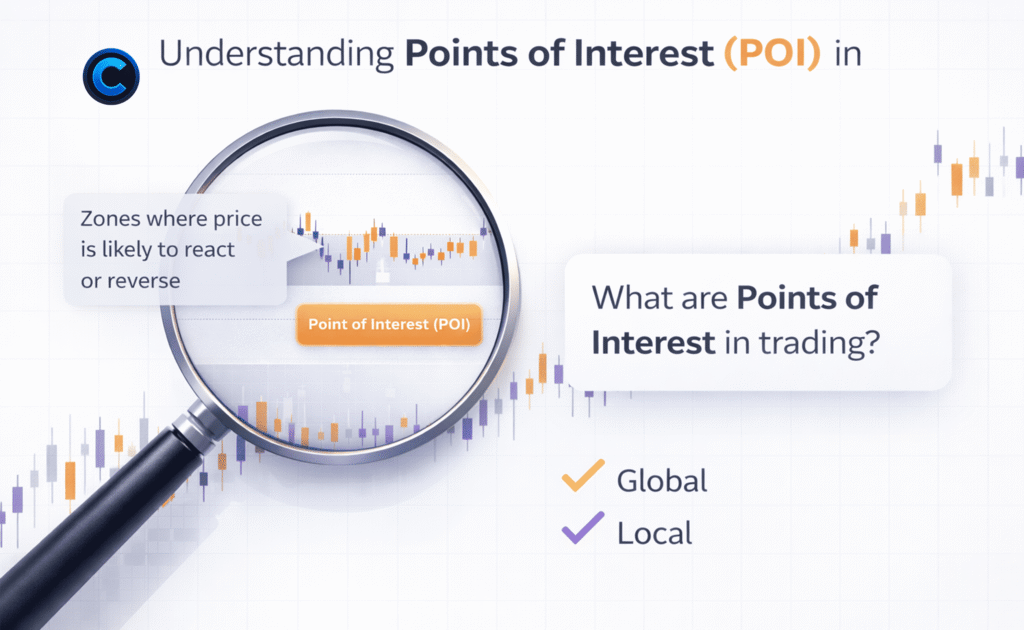
ROI concept in trading (Zone of Interest) is any price zone from which the market can react.
It is an area where price previously showed a strong response and where future reactions are likely.
ROI is not a single indicator or pattern. It is a concept used in Smart Money, market structure, and liquidity-based trading. These zones often form due to the actions of large market participants who either accumulate or distribute positions.
Common ROI-related structures include:
- STB (Sell To Buy)
- BTS (Buy To Sell)
- OB (Order Block)
- SC (Stop Cluster)
- BRK (Breakout-related liquidity zones)
In simple terms, ROI is where interest exists — interest to buy, sell, accumulate, or distribute.
Two Main Types of Zones of Interest
There are two core types of ROI every trader must understand:
- Global Zones of Interest
- Local Zones of Interest
Each type serves a different purpose and is used on different timeframes.
Global Zones of Interest
Global ROIs are large-scale zones where big players accumulated or distributed positions over time.
They usually form during consolidations or wide ranges on higher timeframes.
These zones are best analyzed on:
- Daily
- Weekly
- Higher intraday timeframes
Global ROIs are often used as:
- Potential market reversal points
- Areas for spot accumulation
- Zones of distribution during market tops
They represent locations where large capital was previously active, meaning price is likely to react again when revisiting them.
Example of a Global ROI concept in trading
For the best chart analysis experience, open these structures directly on TradingView.
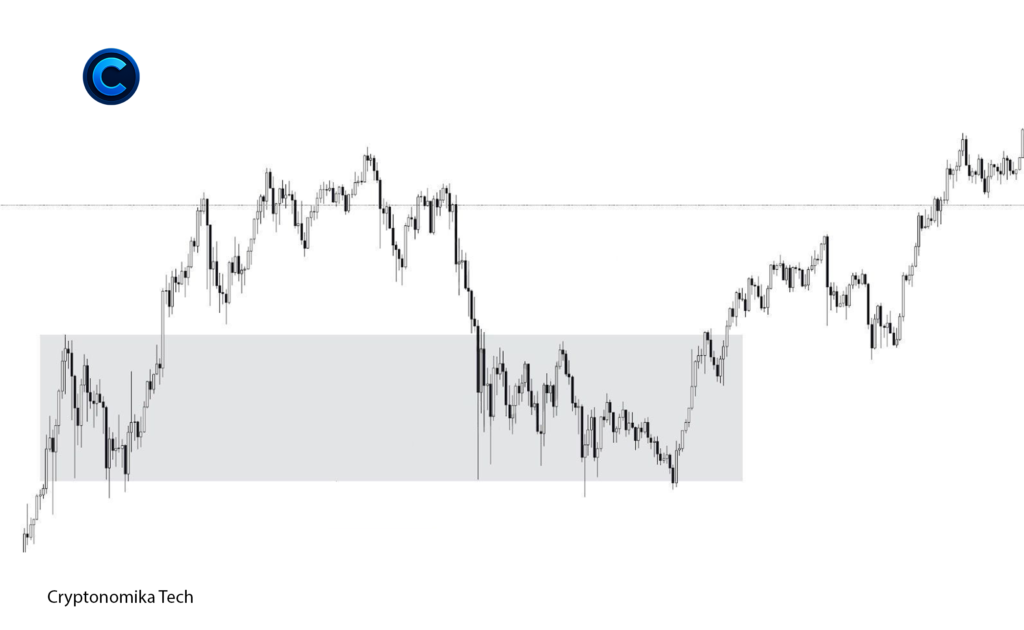
In this example, a single trading range acted as a global accumulation zone twice.
Each time price returned to this zone, large players absorbed liquidity, after which the market produced a strong upward movement.
An important characteristic of global ROIs:
- Price can return multiple times
- Each visit can be used for adding or reducing positions
- The zone remains valid until clearly invalidated by structure
Using Global ROI in Practice
During the Bitcoin drop from 65,000, three major global ROI levels were identified as potential bounce zones.
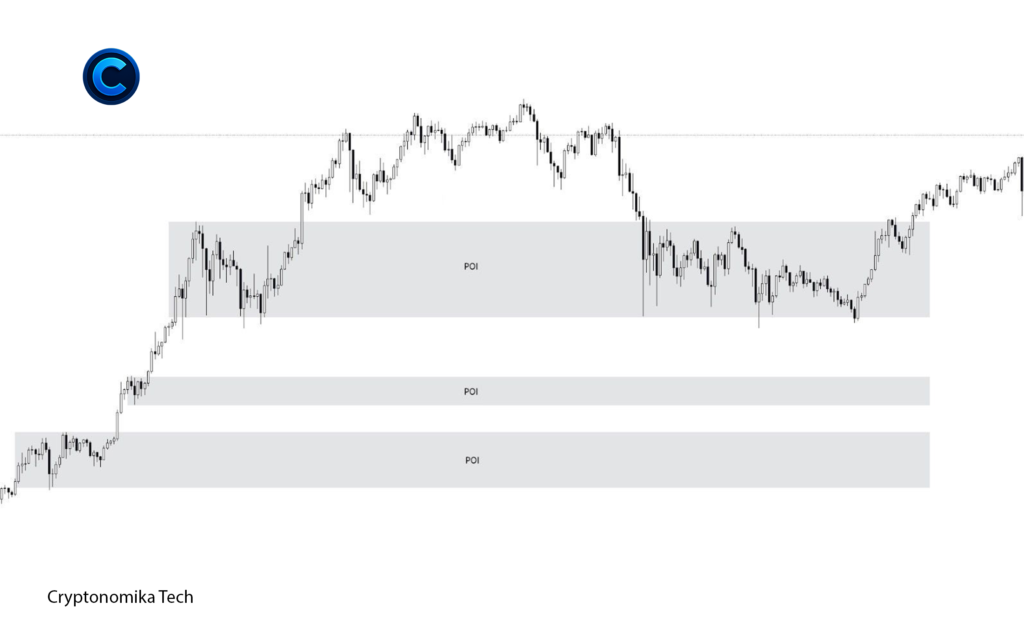
In this example, price reacted strongly from the first global ROI, confirming the validity of the zone.
Such areas are often ideal for:
- Spot accumulation
- Long-term positioning
- Identifying macro market reactions
Global ROIs help traders avoid emotional entries and instead focus on predefined areas of interest.
Local Zones of Interest
Local ROIs are short-term manipulation zones where strong players actively collect liquidity.
These zones are used to:
- Trigger stop losses of retail traders
- Create false moves
- Build liquidity before continuation or reversal
Local ROIs are typically analyzed on:
- Lower timeframes
- Intraday charts
- Execution timeframes
The goal of the smart trader is not to become liquidity, but to align with the move after liquidity has been collected.
Demand and Supply Zones as ROI
Demand and Supply zones are simply another formulation of ROI.
They represent areas where:
- Demand = interest to buy
- Supply = interest to sell
These zones are often the result of manipulative price behavior and are closely tied to liquidity concepts.
Manipulations inside ROI concept in trading can include:
Definitions
- Demand Zone — a zone of interest for buying
- Supply Zone — a zone of interest for selling
Demand Zone Example
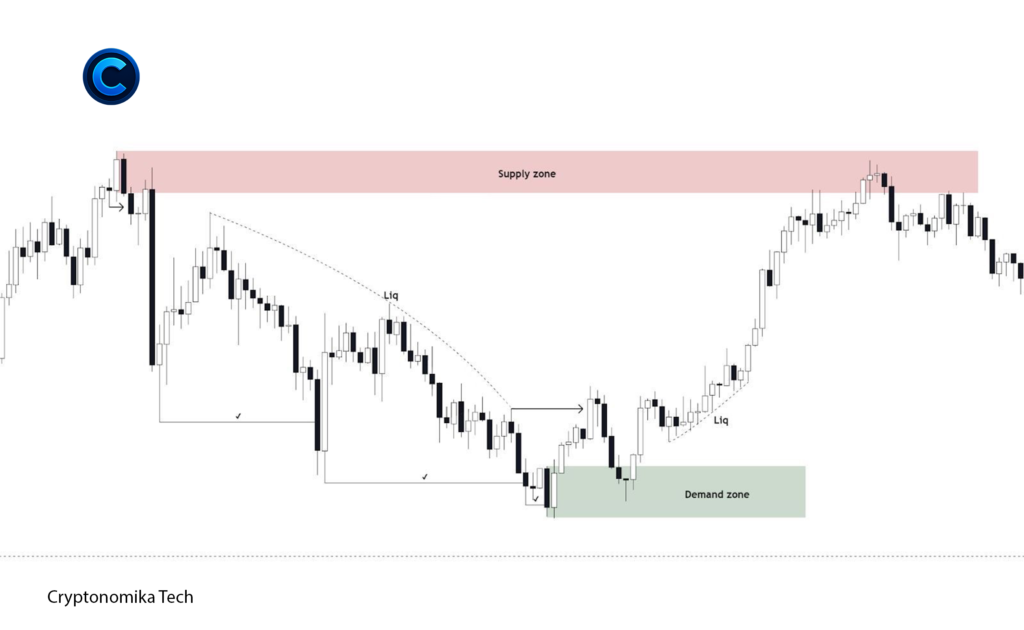
In this example, price enters a demand zone where liquidity was previously collected.
After the test, price moves upward, confirming that buy-side interest was active.
This type of ROI concept in trading is commonly used for:
- Long entries
- Continuation setups
- Liquidity-based confirmations
Liquidity Grab and Structure Break
In ideal conditions, ROI concept in trading manipulation zones:
- Collect liquidity
- Break market structure
- Get retested
Only after these steps does a high-probability entry appear.
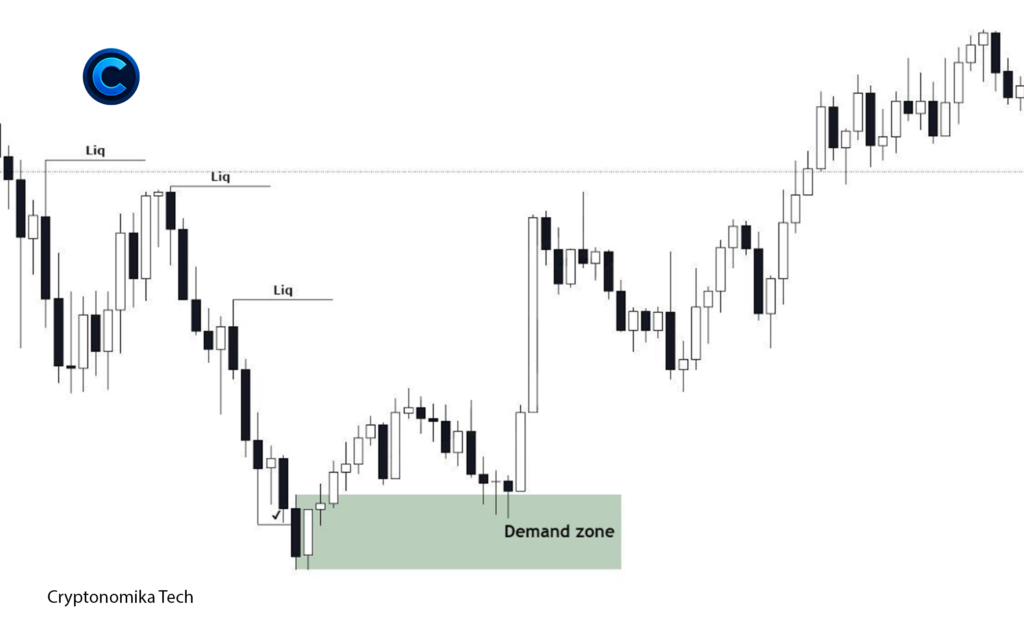
Here, price tests the demand zone, removes liquidity, breaks structure, and then moves in the desired direction.
This behavior confirms that the ROI concept in trading was not random — it was engineered by strong market participants.
Key Takeaways
- ROI is not an indicator — it is a framework
- Global ROIs define macro reactions
- Local ROIs reveal manipulation and execution
- Demand and Supply zones are forms of ROI
- The objective is to trade with liquidity, not against it
Understanding ROI allows traders to stop chasing price and instead wait for the market to come to them.
Related Guide:
Liquidity in Trading: The Concept of Market Liquidity Explained
About the Author

1 thought on “ROI Concept in Trading: 5 Powerful Zones of Interest Explained”