
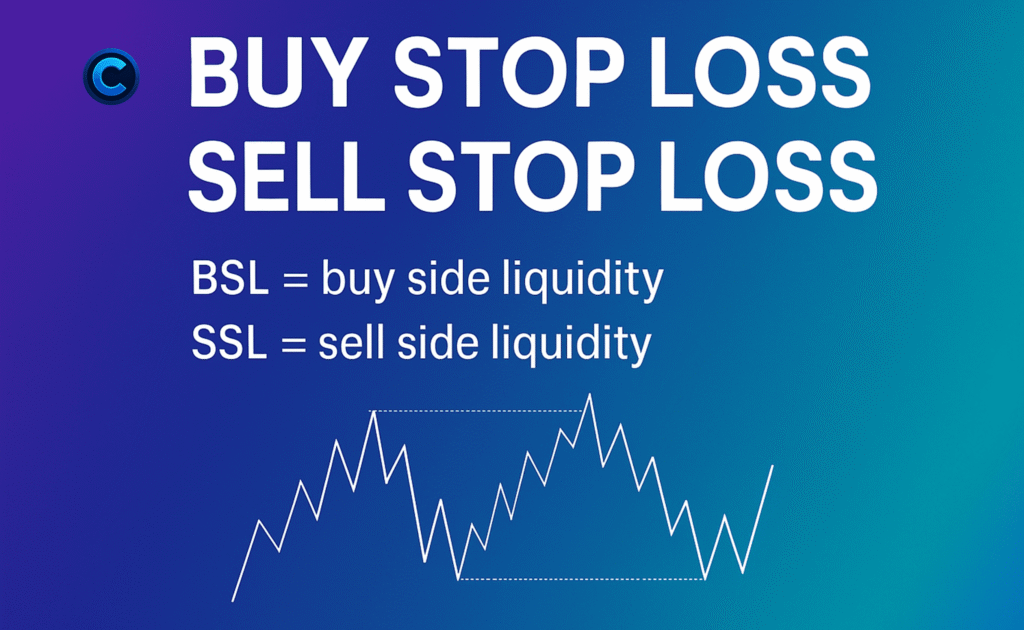
BSL and SSL in trading are core concepts in Smart Money and price action methodology. They explain how liquidity is engineered, where stop losses are clustered, and why price frequently moves toward obvious highs and lows before reversing.
In Smart Money and price action trading, liquidity is one of the most important forces that drives market movements. Price does not move randomly — it moves toward areas where liquidity is concentrated. Two key concepts that help traders identify these areas are BSL (Buy Side Liquidity) and SSL (Sell Side Liquidity).In Smart Money and price action trading, liquidity is one of the most important forces that drives market movements. Price does not move randomly — it moves toward areas where liquidity is concentrated. Two key concepts that help traders identify these areas are BSL (Buy Side Liquidity) and SSL (Sell Side Liquidity).
Understanding how BSL and SSL in trading work allows traders to better read market intentions, anticipate manipulative moves, and align themselves with large market participants rather than trading against them.
What Is Buy Side Liquidity (BSL)?
In the context of BSL and SSL in trading, Buy Side Liquidity (BSL) refers to areas on the chart where short sellers’ stop losses are placed.
When traders open short positions, their stop losses are usually placed above recent highs or above obvious resistance levels. These stop losses are buy orders. As a result, they form a pool of liquidity that large players can use.
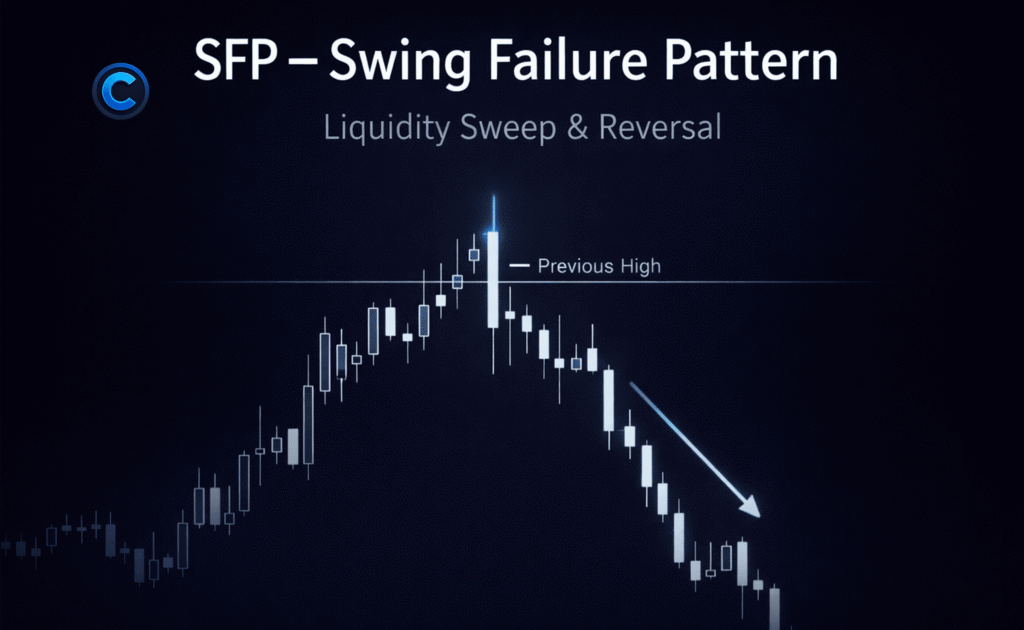
A large market participant can intentionally push price above these highs to trigger short sellers’ stop losses, absorbing their buy orders. By doing so, the market collects buy-side liquidity and often forms a strong resistance level, which may later be used for further manipulation or continuation in the opposite direction.
Key characteristics of BSL:
- Located above swing highs or range highs
- Consists of short sellers’ stop-loss orders
- Acts as external liquidity
- Often swept before a reversal or strong continuation
What Is Sell Side Liquidity (SSL)?
Within BSL and SSL in trading, Sell Side Liquidity (SSL) refers to areas on the chart where long traders’ stop losses are placed.
When traders open long positions, their stop losses are typically placed below recent lows or below support levels. These stop losses are sell orders, creating a pool of sell-side liquidity.
Large players can push price below these lows to trigger long traders’ stop losses, collecting sell orders. After this liquidity is gathered, price often forms a strong support level, which can later be used for manipulation or a reversal.
Key characteristics of SSL:
- Located below swing lows or range lows
- Consists of long traders’ stop-loss orders
- Acts as external liquidity
- Frequently swept before a directional move
Why BSL and SSL Are Considered External Liquidity
BSL and SSL in trading are classified as external liquidity because they are formed at the extreme highs and lows of a specific market range.
Unlike internal liquidity (which exists within a structure or range), external liquidity is clearly visible and highly attractive to large market participants. These areas contain a high concentration of stop orders, making them ideal targets for liquidity grabs.
The market often seeks these extremes before making meaningful moves.
Market Manipulation Around BSL and SSL
Large players do not chase price randomly. They need liquidity to enter or exit large positions without causing excessive slippage.
By targeting BSL or SSL:
- They can accumulate or distribute positions efficiently
- They can trap retail traders by triggering stop losses
- They can create false breakouts or fake breakdowns
This is why price often briefly breaks highs or lows, collects liquidity, and then sharply reverses.
BSL / SSL Diagram
Scheme:


For the best chart analysis experience, open these structures directly on TradingView.
These diagrams illustrate how price moves toward external liquidity, collects stop orders, and reacts afterward.
How to Use BSL and SSL in Trading
Understanding BSL and SSL in trading gives traders a strong contextual advantage, but these concepts should never be used in isolation.
Best practices include:
- Identifying BSL/SSL on higher timeframes
- Waiting for liquidity sweeps rather than anticipating them
- Combining liquidity grabs with market structure shifts
- Using confirmation (such as displacement or break of structure) before entering trades
BSL and SSL work best when aligned with overall market context and higher-timeframe bias.
Common Mistakes Traders Make
Many traders struggle with liquidity concepts because they:
- Enter trades too early before liquidity is taken
- Assume every high or low is BSL or SSL
- Ignore higher-timeframe structure
- Trade against Smart Money instead of following it
Patience is critical. Liquidity is often taken before the real move begins.
Final Thoughts
BSL and SSL in trading are foundational concepts in Smart Money methodology and explain why liquidity is targeted before major market moves.
By learning to identify buy-side and sell-side liquidity, traders can:
- Avoid getting stopped out at obvious levels
- Anticipate manipulative moves
- Improve timing and trade accuracy
When combined with structure, trend, and proper risk management, BSL and SSL in trading become powerful tools for understanding market behavior.
More guides here.
Substructure in Trading: How Internal Market Structure Works
About the Author